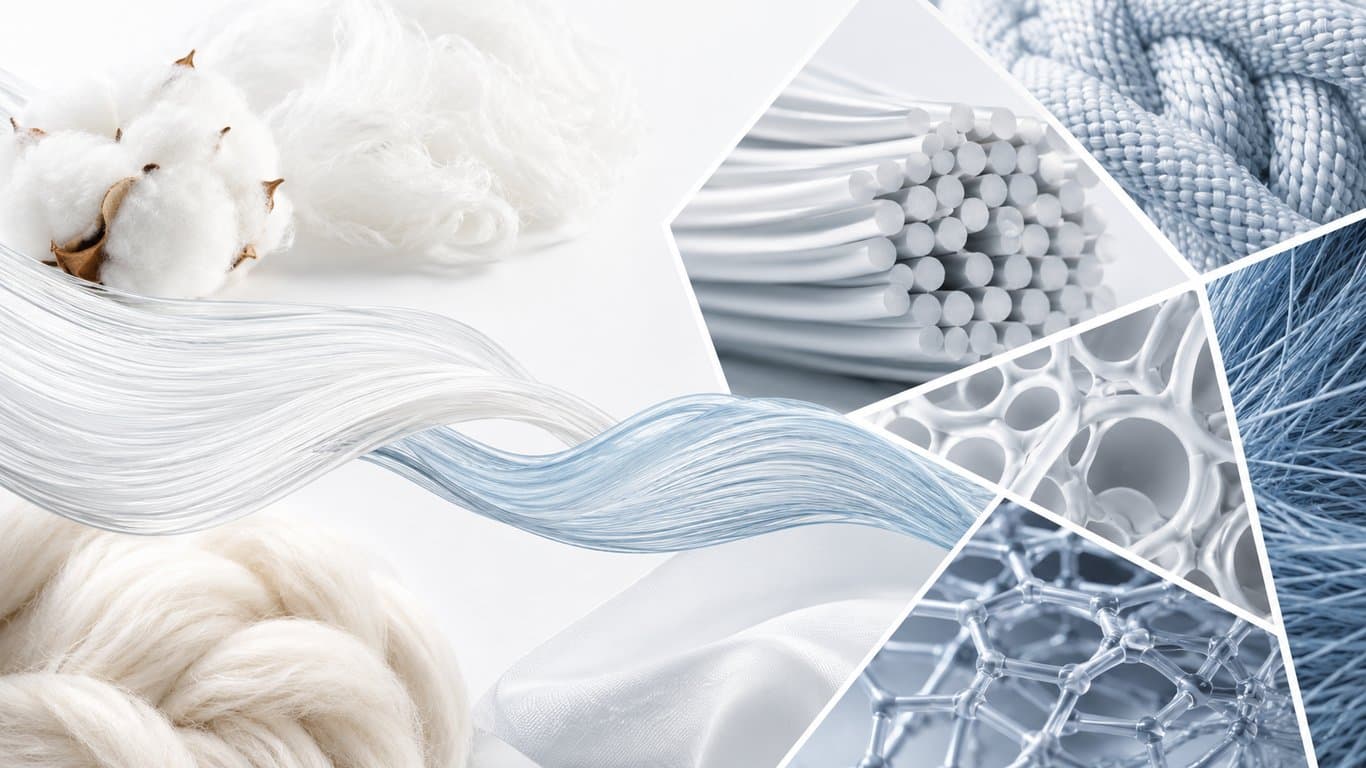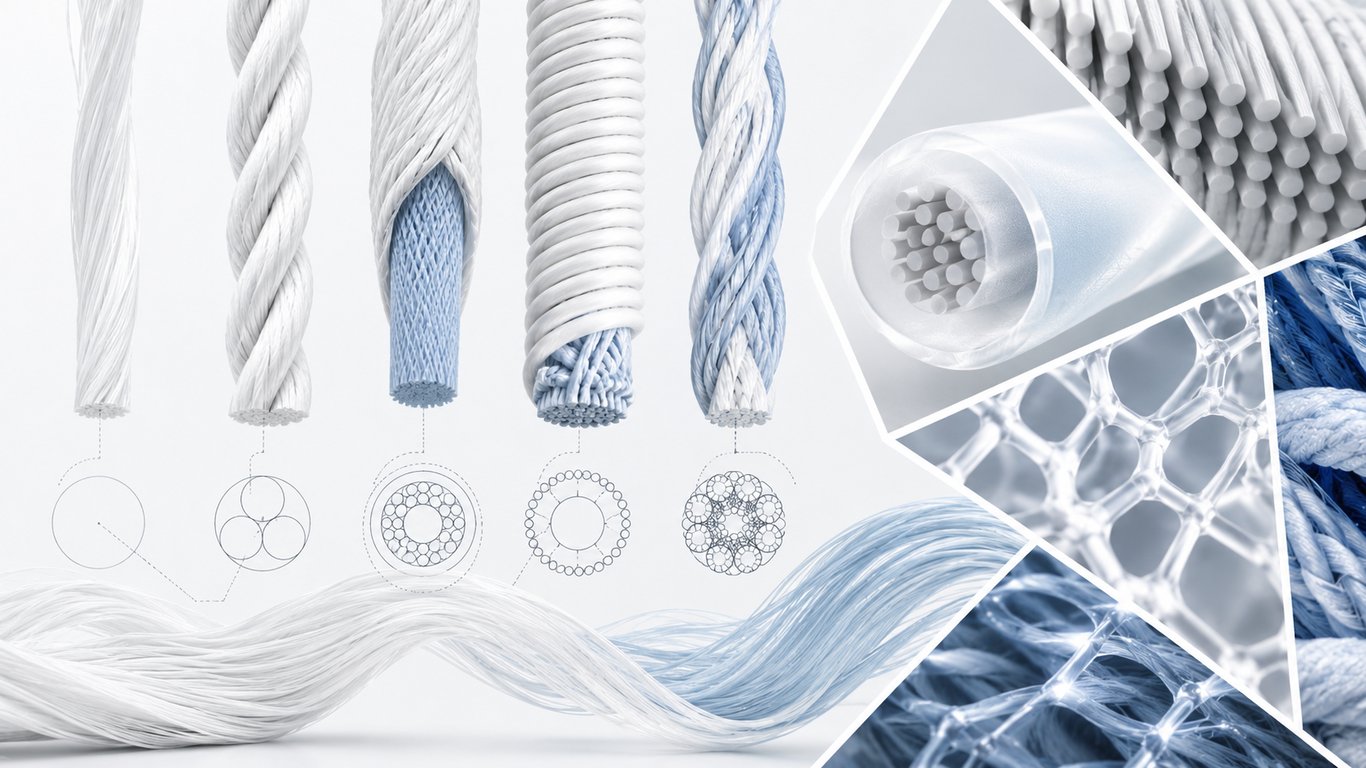
Yarn processing is the transformation of loose fiber materials into continuous yarn systems.
At the beginning of this process, fibers usually exist as a disordered assembly. They may be compressed, tangled, mixed with impurities, uneven in length, bent, hooked, curled, or poorly aligned. At the end of the process, those fibers are expected to form a continuous strand with enough strength, uniformity, appearance, and handling stability for downstream use.
This transformation is not a single action. It is a sequence of mechanical, physical, and sometimes chemical operations that gradually change the state of fibers.
In simple terms, yarn processing does two things:
It loosens the old disordered fiber assembly.
It builds a new ordered fiber assembly.
This is why yarn processing is not just a manufacturing workflow. It is a structural transformation system. It changes how fibers are opened, cleaned, mixed, aligned, drafted, twisted, combined, and finally stabilized into usable yarn.
1. What Yarn Processing Means
Yarn processing refers to the group of operations used to convert fibers into yarn.
The processing route may vary depending on fiber type, yarn type, required quality, and end application. Cotton, wool, flax, hemp, silk waste, regenerated fibers, polyester staple, nylon staple, aramid staple, and blended fibers do not always follow the same route. Their fiber length, fineness, stiffness, crimp, surface friction, moisture behavior, and impurity level are different, so their processing systems must also differ.
However, the basic purpose remains consistent:
Prepare fibers for controlled arrangement
Remove unsuitable impurities or short fibers when necessary
Improve fiber mixing and uniformity
Align fibers in a more longitudinal direction
Draft fiber assemblies to the required fineness
Add twist or other binding mechanisms to create yarn strength
Wind yarn into a package suitable for storage, transport, or further processing
A yarn is not created only by twisting fibers together. Twist is important, but it is only one part of the whole system. Before twisting can create a stable yarn, fibers must first be opened, cleaned, arranged, and drafted into a suitable fiber strand.
This is why yarn processing should be understood as a sequence of preparation, organization, consolidation, and packaging.
2. The Core Logic of Spinning: Loosening and Assembly
The core logic of spinning can be described through two opposite but connected actions:
Loosening → AssemblyFibers in raw or semi-prepared form often have many uncontrolled lateral connections. They may be packed into bales, tangled into clumps, stuck together by natural impurities, held by fiber hooks, or compressed by previous handling. Before a stable yarn can be formed, these uncontrolled connections must be reduced.
This is the loosening side of yarn processing.
After loosening, fibers cannot remain completely separate and disordered. They must be gathered again into a new structure. This new structure should have more longitudinal order, better uniformity, and enough fiber-to-fiber interaction to support yarn formation.
This is the assembly side of yarn processing.
The important point is that yarn processing does not simply destroy fiber connections. It replaces one kind of connection with another.
Raw fiber assemblies usually contain irregular, local, and uncontrolled connections. Yarn processing breaks these down and builds a more useful connection system: fibers are gradually aligned, drafted, combined, and fixed into a continuous yarn.
This is the real engineering logic behind spinning.
3. The Main Yarn Formation Path
Although different spinning systems may use different machines and routes, the fundamental yarn formation path can be understood through four main processing actions:
Opening → Carding → Drafting → TwistingThese four actions are central because they determine whether fibers can become yarn at all. Other processes may improve quality, cleanliness, evenness, or processing efficiency, but these four define the basic transformation from fiber assembly to yarn structure.
3.1 Opening
Opening is the first step in breaking down large fiber masses.
Fibers often arrive in compressed bales, clumps, bundles, or entangled masses. Opening reduces these large fiber assemblies into smaller tufts or bundles so that later processes can work more effectively.
Opening helps to:
Reduce fiber mass size
Loosen compressed fibers
Prepare fibers for cleaning
Improve mixing between fiber lots
Reduce large-scale unevenness
Prepare fiber bundles for carding
Opening must be controlled carefully. If opening is too weak, fiber clumps remain and later processes become unstable. If opening is too aggressive, fibers may be damaged, shortened, or over-stressed.
Good opening is not about tearing fibers apart as strongly as possible. It is about reducing fiber assemblies while preserving fiber quality.
3.2 Carding
Carding is the main process for further loosening fiber bundles and arranging fibers into a more usable form.
During carding, fibers are acted upon by surfaces covered with fine teeth, needles, or wire clothing. These surfaces separate fiber bundles, remove some impurities and neps, mix fibers further, and begin to form a more continuous fiber web or sliver.
Carding helps to:
Separate fiber bundles into smaller units or individual fibers
Remove some impurities, short fibers, and defects
Improve fiber mixing
Begin fiber alignment
Form a web or sliver
Prepare material for drafting
Carding is often the first major step where a disordered fiber mass starts to become a more organized textile material. However, carded fibers are not yet fully straight or parallel. Many fibers still contain hooks, bends, or irregular orientation.
This is why carding is important but not sufficient by itself.
After carding, the fiber assembly usually becomes a sliver. A sliver is not yarn. It has almost no twist and limited strength. But it is a more controlled fiber assembly that can be drafted, doubled, combed, or further processed.
Carding is where fiber disorder begins to become textile order.
3.3 Drafting
Drafting draws a fiber assembly into a finer and longer form.
After carding, the fiber assembly is usually still too thick and not sufficiently aligned. Drafting reduces the linear density of the sliver or roving by pulling fibers apart along the length direction. During this process, fibers become more straightened and more parallel.
Drafting helps to:
Reduce thickness
Improve fiber orientation
Increase fiber straightness
Remove some hooks and bends
Control yarn count or linear density
Prepare the fiber strand for twisting
Drafting is one of the most delicate processes in yarn formation because fibers do not all move at the same time. Some fibers are controlled by one roller pair, while others are transitioning between roller speeds. This creates a drafting zone where fiber control, friction, length distribution, and roller settings all matter.
Poor drafting may lead to:
Uneven yarn
Thick and thin places
Fiber slippage
Drafting waves
Weak spots
Higher end breakage
Poor yarn appearance
Drafting is not only a size-reduction process. It is also a fiber control process.
In yarn engineering, drafting connects fiber length, fiber friction, fiber straightness, and yarn evenness.
3.4 Twisting
Twisting fixes the drafted fiber strand into a yarn.
Before twisting, the fiber strand has been opened, carded, and drafted, but the fibers still need a stable binding mechanism. Twisting rotates the fiber strand around its own axis, causing fibers to hold together through helical arrangement, friction, pressure, and fiber-to-fiber contact.
Twisting helps to:
Give yarn strength
Stabilize the fiber strand
Improve abrasion resistance
Control yarn compactness
Influence stiffness and flexibility
Affect yarn appearance and handle
Influence downstream processing behavior
Twist is one of the most important structural variables in yarn design.
Too little twist may produce weak, loose, unstable yarn. Too much twist may make yarn hard, less flexible, and sometimes lower in strength after the optimum twist point. The correct twist level depends on fiber length, fiber fineness, fiber surface, yarn count, intended use, and downstream processing.
Twist direction also matters. S twist and Z twist influence yarn behavior in plying, sewing, knitting, weaving, and other downstream operations.
Twisting is not only a final step. It is the moment when a drafted fiber strand becomes a coherent yarn structure.
4. Supporting Processes That Improve Yarn Quality
Opening, carding, drafting, and twisting determine the possibility of yarn formation. But many other processes are needed to improve yarn quality, stability, cleanliness, and production continuity.
These supporting processes include:
Mixing
Cleaning
Combing
Doubling
Winding
They may not always determine whether yarn can exist, but they strongly influence whether the yarn is good, consistent, and suitable for its intended application.
4.1 Mixing
Mixing combines fibers from different lots, grades, origins, colors, or compositions.
Mixing is used to improve consistency, control cost, balance performance, and create blended yarn systems. It is especially important when raw materials vary naturally or when multiple fibers are used in one yarn.
Mixing may involve:
Same fiber type from different batches
Different fiber grades
Different fiber lengths or fineness levels
Different colors
Different fiber materials
Natural and synthetic fiber blends
Recycled and virgin fiber blends
Good mixing reduces variation. Poor mixing creates uneven color, uneven strength, inconsistent dyeing, unstable processing, and unpredictable yarn quality.
In industrial yarn development, mixing is not only a production step. It is also a design decision.
4.2 Cleaning
Cleaning removes unwanted non-fiber materials and defects.
Different fibers contain different impurities. Cotton may contain seed fragments, leaf trash, dust, and neps. Wool may contain grease, sweat, dirt, vegetable matter, and other contaminants. Bast fibers may contain gums and woody materials. Silk waste may contain sericin, oil, dirt, and irregular waste components.
Cleaning helps to:
Remove impurities
Reduce defects
Improve processing stability
Protect machinery
Improve yarn appearance
Reduce weak points
Improve downstream performance
Cleaning must also be controlled. Excessive cleaning may damage fibers, increase short fiber content, or reduce yield. The best cleaning strategy removes harmful material while preserving useful fiber quality.
4.3 Combing
Combing is a more refined fiber preparation process.
It is used when higher yarn quality is required. Combing removes short fibers, small impurities, neps, and some remaining fiber hooks. It also improves fiber parallelization and length uniformity.
Combing helps to produce yarns with:
Better evenness
Higher strength
Lower hairiness
Fewer neps
Better appearance
Better smoothness
Improved yarn quality for finer counts
However, combing also removes fiber mass as waste. This means it increases cost and reduces yield. Therefore, combing is usually used when the required yarn quality justifies the extra processing.
Combing is common in fine cotton yarns, worsted wool systems, long bast fiber systems, and other applications requiring better fiber alignment and quality control.
4.4 Doubling
Doubling combines multiple slivers, rovings, yarns, or strands together.
In earlier processing stages, doubling is used to improve evenness. When several slivers are combined and drafted together, variations can partially offset each other. This improves uniformity and mixing.
In later processing stages, doubling may prepare yarns for plying or twisting.
Doubling helps to:
Improve evenness
Improve blending
Reduce variation
Prepare material for drafting
Prepare yarns for plying or twisting
Improve final yarn consistency
Doubling is one of the quiet but important processes in spinning. It does not always look dramatic, but it strongly affects yarn regularity.
4.5 Winding
Winding connects yarn processing stages and prepares yarn for storage, transport, or downstream use.
Winding may appear many times during yarn processing. Fibers may be formed into laps, slivers may be placed in cans, rovings may be wound onto bobbins, spun yarn may be wound onto cops, cones, or packages, and plied yarns may be rewound after twisting.
Winding helps to:
Build packages
Remove some defects
Improve handling
Prepare yarn for twisting, weaving, knitting, dyeing, or shipping
Control package density
Improve downstream unwinding stability
Winding is often underestimated. A yarn with good structure can still cause problems if its package is poorly wound. Tension, package density, winding angle, surface hardness, and package shape all affect downstream performance.
For industrial yarns, sewing threads, technical yarns, and cords, winding quality is part of yarn quality.
5. Yarn Processing as an Engineering Flow
Yarn processing can be viewed as an engineering flow from fiber preparation to finished yarn package.
The exact route depends on fiber type and yarn quality requirements, but a typical fiber-to-yarn process may include:
Raw fiber preparation
→ Opening and cleaning
→ Carding
→ Combing, if required
→ Drawing
→ Roving, if required
→ Spinning
→ Post-spinning processing
→ Winding and packaging
This flow is not just a list of machines. Each stage changes the fiber assembly in a specific way.
Processing Stage | Main Function | Main Structural Effect |
|---|---|---|
Raw fiber preparation | Remove major impurities and prepare fiber material | Makes fiber usable for spinning |
Opening | Break large fiber masses into smaller tufts | Reduces disorder at large scale |
Cleaning | Remove impurities and defects | Improves cleanliness and stability |
Carding | Separate and organize fibers | Forms web or sliver |
Combing | Remove short fibers and improve alignment | Improves length uniformity and parallelization |
Drawing | Draft and align fiber assemblies | Reduces linear density and improves orientation |
Roving | Further draft and slightly consolidate | Prepares material for final spinning |
Spinning | Draft, twist, and form yarn | Creates final yarn structure |
Post-processing | Wind, ply, twist, steam, singe, or condition | Improves package form and final yarn properties |
A good yarn processing system is not defined only by how many stages it has. It is defined by whether each stage supports the next one.
If opening is poor, carding becomes unstable. If carding is poor, drafting becomes difficult. If drafting is poor, twisting cannot fix the unevenness. If winding is poor, downstream processing may fail even when yarn formation was technically successful.
Yarn quality is cumulative.
6. Major Spinning Systems
Different fibers require different spinning systems because their physical characteristics differ.
Fiber length, fineness, stiffness, crimp, impurity content, surface friction, moisture behavior, and required yarn quality all influence the choice of processing route.
The main traditional spinning systems include:
Cotton spinning system
Wool spinning system
Bast fiber spinning system
Silk waste spinning system
Modern systems also include many routes for synthetic staple fibers, regenerated fibers, blended fibers, and new spinning technologies.
6.1 Cotton-Type Spinning
Cotton-type spinning is commonly used for cotton and cotton-type chemical fibers.
It usually includes opening, cleaning, carding, drawing, roving, spinning, and post-processing. If higher yarn quality is required, combing may be added.
Cotton-type spinning is widely used because it is mature, efficient, and suitable for many short staple fibers and blends.
Typical yarns include:
Cotton yarn
Polyester/cotton yarn
Viscose yarn
Polyester staple yarn
Cotton-type blended yarns
In this system, fiber length, short fiber content, trash content, maturity, fineness, and moisture behavior strongly affect processing stability and yarn quality.
6.2 Wool-Type Spinning
Wool-type spinning is used for wool and wool-type fibers, including longer animal fibers and long chemical staple fibers.
Wool spinning systems may be divided into woollen, worsted, and semi-worsted systems. These systems differ in raw material quality, fiber length control, combing, drafting route, and final yarn style.
Woollen yarns are usually bulkier, softer, and less parallelized. Worsted yarns are smoother, more parallelized, and more uniform.
This shows an important idea: processing route affects yarn character. The same broad fiber family can create very different yarn types depending on how fibers are opened, carded, combed, drawn, and twisted.
6.3 Bast Fiber Spinning
Bast fibers such as flax, hemp, ramie, and jute require special preparation because they often contain gums, woody materials, and long fiber bundles.
Processing may include degumming, softening, opening, hackling or combing, drawing, roving, and spinning. Wet spinning may be used for some flax systems to improve fiber flexibility and yarn quality.
Bast fiber spinning reminds us that yarn processing must respect fiber biology and fiber bundle structure. These fibers are not simply “long cellulose fibers.” Their gum content, stiffness, length variation, and bundle structure strongly influence processing decisions.
6.4 Silk Waste Spinning
Silk filament can be reeled directly when continuous filaments are available. But silk waste, defective cocoons, and silk processing by-products require a different route.
Silk waste spinning involves degumming or refining, opening, cutting, combing, drawing, roving, spinning, and post-processing depending on the system.
This route shows that even a high-value fiber material must be processed according to its available form. Long continuous silk and silk waste do not follow the same logic.
6.5 Synthetic and Blended Fiber Spinning
Synthetic staple fibers and regenerated fibers can often be processed through cotton-type or wool-type systems depending on their cut length, fineness, crimp, and intended yarn type.
Blended yarns add another layer of complexity.
When two or more fibers are blended, yarn processing must consider:
Blend ratio
Fiber length compatibility
Fiber fineness compatibility
Fiber density differences
Static behavior
Moisture behavior
Dyeing behavior
Friction differences
Mixing uniformity
Processing tension
Blending is not simply putting different fibers together. It requires a processing route that can maintain uniform distribution and stable yarn formation.
7. Processing Variables That Shape Yarn Quality
Yarn quality is shaped by both fiber properties and processing variables.
Important processing variables include:
Opening intensity
Cleaning efficiency
Carding settings
Combing noil percentage
Draft ratio
Roller gauge
Fiber control in drafting zones
Twist level
Twist direction
Spindle speed
Winding tension
Humidity and temperature
Package density
Machine condition
Process sequence
These variables interact with fiber properties.
A fiber with high surface friction may require different drafting control from a smooth filament-like fiber. A fiber with high short fiber content may create more unevenness and hairiness. A fiber with poor moisture control may cause static problems. A high-strength but stiff fiber may require careful twist and tension management.
Yarn processing is therefore not just machine operation. It is the adjustment of process conditions around fiber behavior.
8. Yarn Processing and Yarn Quality
The quality of yarn depends on how well processing transforms fiber properties into a stable linear structure.
Common yarn quality indicators include:
Linear density
Evenness
Strength
Elongation
Hairiness
Twist level
Twist variation
Imperfections
Neps
Abrasion resistance
Flexibility
Appearance
Package quality
Downstream processing stability
Different applications require different quality priorities.
A knitting yarn may need softness, evenness, and low defects. A sewing thread may need strength, low friction, controlled twist, and good package unwinding. A weaving yarn may need strength, abrasion resistance, and low end breakage. A cord yarn may need load-bearing strength and fatigue resistance. A technical yarn may need consistency under heat, moisture, chemicals, or mechanical stress.
Yarn quality cannot be separated from application.
This is why yarn processing should be evaluated not only by laboratory numbers, but also by downstream performance.
9. Yarn Processing vs Yarn Engineering vs Yarn Modification
It is useful to separate three related ideas:
Yarn Processing
Yarn Engineering
Yarn Modification
Yarn Processing refers to the formation route that converts fibers into yarn.
It includes opening, cleaning, carding, combing, drawing, roving, spinning, plying, winding, and other formation-related steps.
Yarn Engineering is broader. It includes yarn structure design, material selection, twist design, ply structure, core-sheath logic, cable structure, braided structures, and performance-oriented yarn design.
Yarn Modification happens after yarn formation or alongside final finishing. It includes heat setting, waxing, lubrication, coating, plasma treatment, chemical finishing, and functional surface treatment.
These three fields overlap, but they should not be confused.
For example:
Drafting is yarn processing.
Choosing a 3-ply cable structure is yarn engineering.
Applying lubrication to improve sewing behavior is yarn modification.
Steam setting a yarn after twisting may connect processing and modification.
Coating a yarn for abrasion resistance belongs mainly to modification.
This distinction helps keep the knowledge system clear.
Summary
Yarn processing is the transformation of fiber assemblies into continuous yarn systems.
Its core logic is the replacement of disorderly fiber connections with a more useful longitudinal structure. This transformation is achieved through opening, carding, drafting, and twisting, supported by mixing, cleaning, combing, doubling, and winding.
Different fibers require different processing systems. Cotton, wool, bast fibers, silk waste, synthetic staple fibers, and blended fibers each require processing routes suited to their material form and performance requirements.
Yarn processing should be understood as an engineering system, not just a sequence of machines. Each stage changes the fiber assembly. Each stage affects the next. Each processing decision influences yarn quality, downstream performance, and potential failure.
To understand yarn, it is not enough to know the fiber material. It is also necessary to understand how that fiber is opened, organized, drafted, twisted, combined, and packaged.
Yarn begins as fiber.
Yarn processing is the path that turns fiber into structure.